NAMKOO
 November 19, 2025
 1349
1349
Choosing the right inverter is one of the most important decisions in any solar or off grid power setup. An inverter takes DC energy from a battery bank and turns it into the AC electricity that homes and appliances rely on. When the inverter does a poor job, devices run inefficiently, overheat, or fail long before expected.
This is why many homeowners, RV users, solar installers, and off grid operators spend extra time comparing inverter types before committing. The two most common designs are the pure sine wave inverter and the modified sine wave inverter. Modified units cost less and work for very simple loads. Pure sine wave models create cleaner, safer, and more efficient power, which is especially important for sensitive or motor-driven equipment.
Before we look at the differences, it helps to understand how inverter quality shapes the performance of an entire solar energy system.
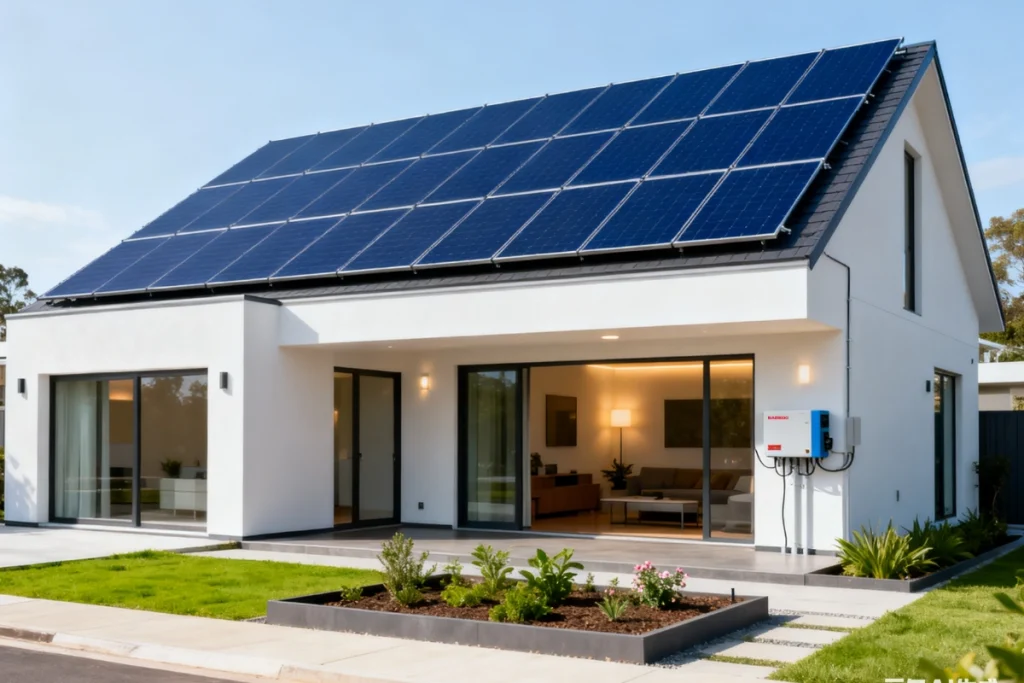
A solar inverter performs several critical functions. It converts DC electricity from solar panels and batteries into stable AC power. It manages charging behavior. It protects appliances from irregularities in current and voltage. In hybrid or off grid solar power systems, the inverter often decides how energy flows between solar input, batteries, and local loads.
Since the inverter controls every part of the system, its internal waveform quality matters. A poor waveform stresses components and lowers system efficiency. A clean waveform keeps appliances cool, quiet, and long lasting.
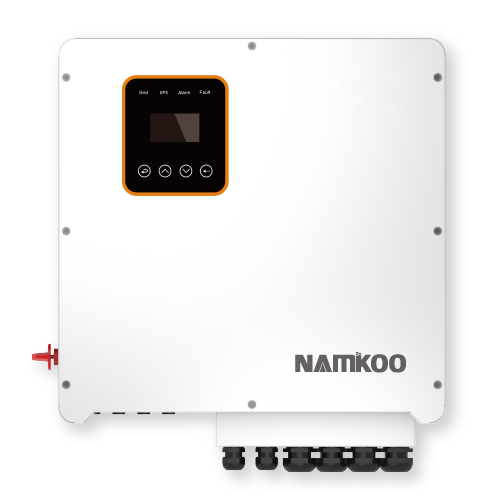
If you are exploring high performance inverter options, Namkoo Power provides a full range of advanced inverter technologies including hybrid inverters, off grid solar inverter, and battery inverters.
Namkoo Power designs inverters that work seamlessly with lithium battery packs, off grid solar systems, and PV hybrid setups, which makes them suitable for both home and commercial applications.
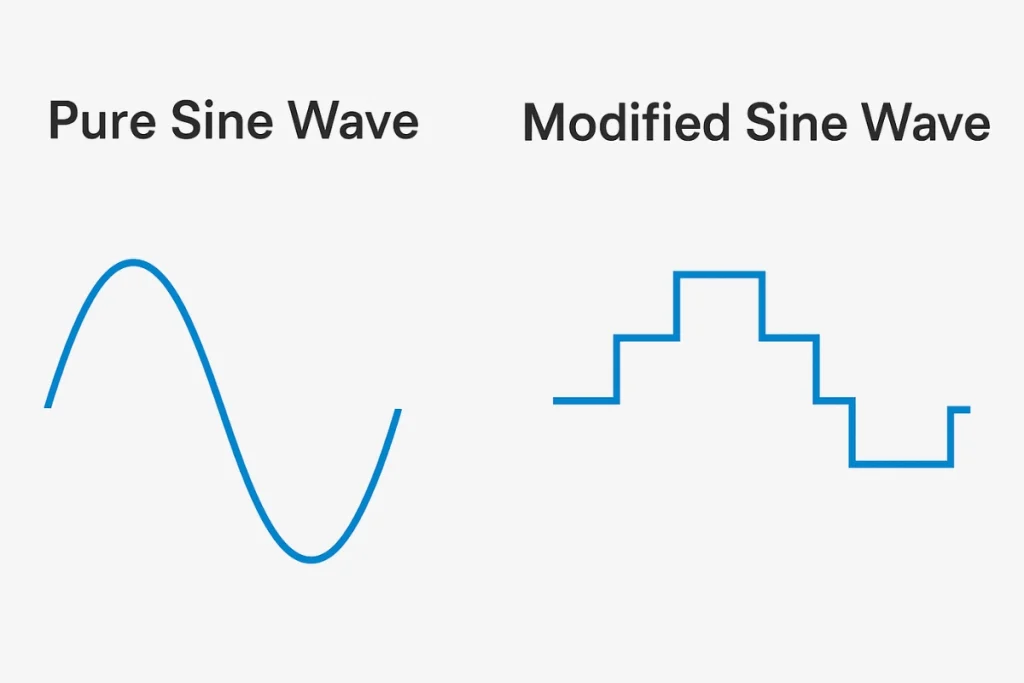
Utility companies deliver electricity in the form of a smooth sine wave. This curve rises and falls gently. Most household appliances are designed around this clean shape. When power follows the same pattern, devices run cooler, quieter, and more efficiently.
A smooth sine wave supports stable performance. Lights shine at consistent brightness. Motors spin without vibration. Chargers operate without overheating. Anything with electronics inside expects this clean waveform.
A modified sine wave inverter uses a stepped pattern to imitate AC power. Instead of a smooth rise and fall, the waveform jumps upward in square blocks. This shape creates distortion that devices must correct internally. The extra work causes heat, noise, and unpredictable behavior.
Distortion increases harmonic content. Harmonics pull motors and coils out of rhythm. Heat builds in transformers. Chargers take longer to complete a cycle and often run hotter than usual. Over time, this wears down components that were never designed for rough power.
Modified units still have a place. They are affordable and work for simple resistive loads. However, they are not suitable for modern electronics or devices with motors, compressors, or microprocessors.
A pure sine wave inverter produces power that closely matches utility grid quality. Total Harmonic Distortion (THD) stays low, often below 3 to 5 percent in high quality units. The waveform is smooth and predictable. Sensitive electronics interpret it as “normal” power and perform at their best.
Low THD reduces electrical noise. It prevents overheating. It protects delicate charging circuits inside laptops, phones, medical devices, and communication systems. A pure sine wave inverter also handles inductive loads more effectively and often runs at higher conversion efficiency.
These advantages make pure sine wave inverters the preferred choice for off grid homes, RVs, marine systems, and solar setups designed for daily use.
Both inverter types convert DC to AC. The difference lies in quality, efficiency, and compatibility. In nearly every category, a pure sine wave inverter performs better.
Sensitive devices require stable, predictable power. A pure sine wave inverter handles them effortlessly.
With a modified sine wave inverter, problems often appear such as:
• Laptop chargers becoming hot or shutting down
• LED and fluorescent lights flickering
• CPAP machines displaying error codes
• Variable speed tools running inconsistently
• Laser printers refusing to start
Pure sine wave inverters provide clean power that keeps these devices safe and reliable.
Pure sine wave inverters usually reach efficiency ratings of 90 percent or more. Modified versions often drop to the low 80 percent range or lower.
Lower efficiency leads to:
• Shorter battery runtime
• More heat in motors or transformers
• Faster battery depletion
• Higher long term operating cost
Pure sine wave units waste less energy and keep systems cooler.
Modified sine wave inverters often produce an audible hum because of the stepped waveform. Transformers, pumps, fans, and even chargers vibrate under the uneven load.
Pure sine wave inverters operate silently. Appliances connected to them also stay quiet, which improves comfort in RVs, bedrooms, offices, or off grid homes.
Not all setups require a pure sine wave inverter. However, certain applications depend on clean power to function safely.
Medical equipment such as CPAP machines, oxygen concentrators, and home care appliances require stable current. Many manufacturers specify pure sine wave power only. A modified sine wave inverter may cause pressure errors or complete shutdowns.
Audio amplifiers, mixers, recording gear, and radio communication systems pick up distortion from modified power. Users often report humming, static, or reduced clarity. Pure sine wave inverters preserve clean signal quality.
Inductive loads need smooth power to handle startup surges. Modified waveforms increase stress and shorten lifespan. Compressors, well pumps, freezers, and refrigerators perform better and last longer with a pure sine wave inverter.
Modified units work well for simple resistive loads such as incandescent lights, older heaters, and uncomplicated tools. They are suitable for low cost backup systems or temporary emergency use. They should not be used for daily living loads.
A pure sine wave inverter costs more to manufacture because of the advanced electronics inside. However, the long term cost benefits usually outweigh the higher initial price.
You save money by:
• Extending appliance lifespan
• Improving battery efficiency
• Reducing heat-related failures
• Minimizing replacements and repairs
For daily or long term use, a pure sine wave inverter nearly always pays for itself.
Look for a THD rating below 5 percent. Also confirm the inverter uses true RMS measurement for accurate power conversion.
Motors and compressors require two to three times their running watts to start. A pure sine wave inverter handles surges better than modified units. Always size the inverter to manage the highest expected surge.
A pure sine wave inverter is the best choice for most modern applications. It offers clean energy, high efficiency, quiet performance, and full compatibility with sensitive electronics. Modified sine wave inverters can save money on simple loads. However, they fall short for home use, medical equipment, and motor-based systems.
If your goal is reliability and long term protection of your appliances, a pure sine wave inverter provides the highest value.
For high quality solar inverters that support off grid living, hybrid solar setups, and lithium battery systems, explore Namkoo Power’s solar inverter series:
👉 https://www.namkoopower.com/product-category/solar-inverter/
Namkoo Power designs durable and high performance inverters for customers worldwide and continues to be a trusted manufacturer and complete energy solutions provider.
Yes. Most modern appliances work better and last longer with pure sine wave power.
Calculate your total continuous wattage, then choose an inverter with 1.5 to 2 times that capacity to handle surges.
Yes. It is the safest and most efficient choice for compressors and refrigeration equipment.
It uses advanced electronics that create cleaner, low-distortion power which extends the life of connected devices.
Yes. The higher conversion efficiency results in longer battery runtime.

Introducing the components of energy storage systems, enablers, technology and application, providing the information you most want to know about energy storage.


Discover how commercial and industrial energy storage for rural electrification empowers remote African communities with reliable, renewable energy solutions.
Discover how Namkoo showcased advanced solar power system solutions and energy storage innovations at Canton Fair 2026.




No.26-3,1st Floor, Kuiqi Road West Extension, Nanzhuang Town,Chancheng District,Foshan City,Guangdong Province, China (528000)

Contact Number: +86 18826309307

Email: [email protected]